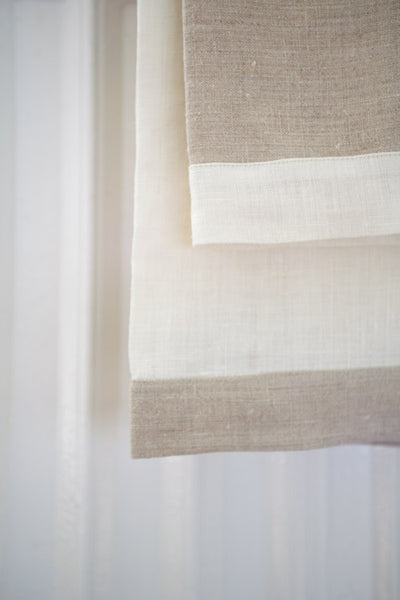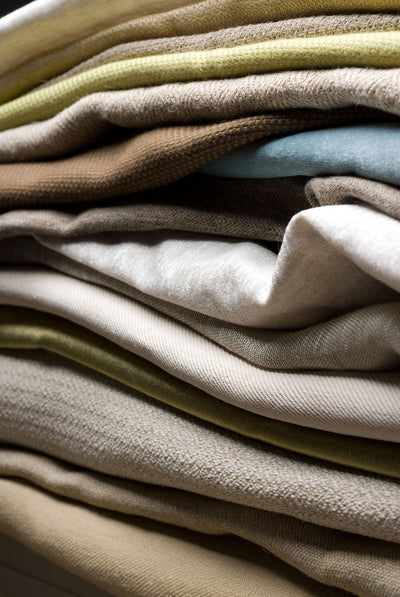


About
You do not want toxic chemicals with your black out curtain or lining - and now you can have that! While most blackouts on the market achieve black out by gluing together multiple layers of fabric; we do not use glue at all. Our ivory black out achieves the black out by a very complicated continuous weave in which the black, sunlight absorbing layer is woven between two layers of ivory. All one weave. No glues. To achieve blackout, a dark layer is needed to absorb UV rays. (A layer of synthetic foam may also serve this function, but we don’t know much about that very unappealing route to achieve black out). If there is not UV absorbing layer, the curtains will “glow.” It will be room darkening, but not blackout. This fabric can stand alone or be a liner for another decorative fabric as the curtain fabric.
Eco Facts
No noxious glues or acrylic foams used. And the liner is Oeko-Tex 100 certified, meaning that there are no chemicals of concern in the fabric that you are bringing into your home or office. Now, the yarns are still plastic. You can achieve blackout with al natural fiber fabrics, but it is more expensive. It is basically the old way we achieved black out before the advent of foams, and complicated weaves: multiple layers. We do deeply discount the black out layers if you buy the curtain fabric from us. Some of the black out layer options: the darker colors of Puget 2, Dungeness; Victoria, Winthrop and Winthrop Too. With our muslin as a third payer so the layer facing the sun does not fade unduly.Uses
Black out liner or stand alone black out curtain fabric
Specifications
- care: Washable in all temps, pre-shrunk
- certification: Oeko-Tex 100
- content: 100% polyester (a cellulosic version still about a year away)
- weight: 7.5 oz yd2 / 212 gm m2
- width: 59" / 149 cm